



GST (Goods and Services Tax) is a 10% tax added to most goods and services sold or consumed in Australia. Registered businesses collect GST on sales, claim credits on business purchases and report the difference to the ATO through their BAS. You must register once your GST turnover reaches $75,000 ($150,000 for non-profits), or from the first dollar if you drive a taxi or rideshare. Basic food, many health services, education and exports are GST-free.
GST has a way of turning up at the worst possible moment: when a quarterly bill lands and the cash you thought was profit turns out to belong to the ATO. If you have ever searched what is gst and ended up more confused than when you started, this guide is for you. We keep the jargon low and the examples practical, so you know what to charge, what to claim and how to keep GST from squeezing your cash flow.
Key Takeaways
- GST is a 10% tax on most goods and services sold or consumed in Australia.
- You must register once your GST turnover hits $75,000, or $150,000 for non-profits. Taxi and rideshare drivers must register from day one.
- GST turnover is your income before GST, not your profit.
- Registered businesses collect GST on sales and claim credits on purchases, then report the difference on their BAS.
- Basic food, many health services, education and exports are GST-free. Financial services and residential rent are input-taxed.
- The GST you collect is not your money. Set it aside as you go.
What Is GST?

GST stands for Goods and Services Tax. It is a broad, flat-rate tax of 10% that applies to most things sold or consumed in Australia, from a tradie’s invoice to a new laptop. It was introduced on 1 July 2000 to replace a patchwork of older state and federal taxes.
Here is the part that surprises many owners: GST is ultimately paid by the end consumer, not the business. Businesses simply act as collectors. They add GST to their prices, pass it on to the ATO and recover the GST they pay on their own business purchases. That is why GST should never be treated as business income.
To see how gst in australia works at a glance, think of three moving parts: GST you charge your customers, GST you pay your suppliers and the difference you hand to the ATO.
How Does GST Work for a Business?
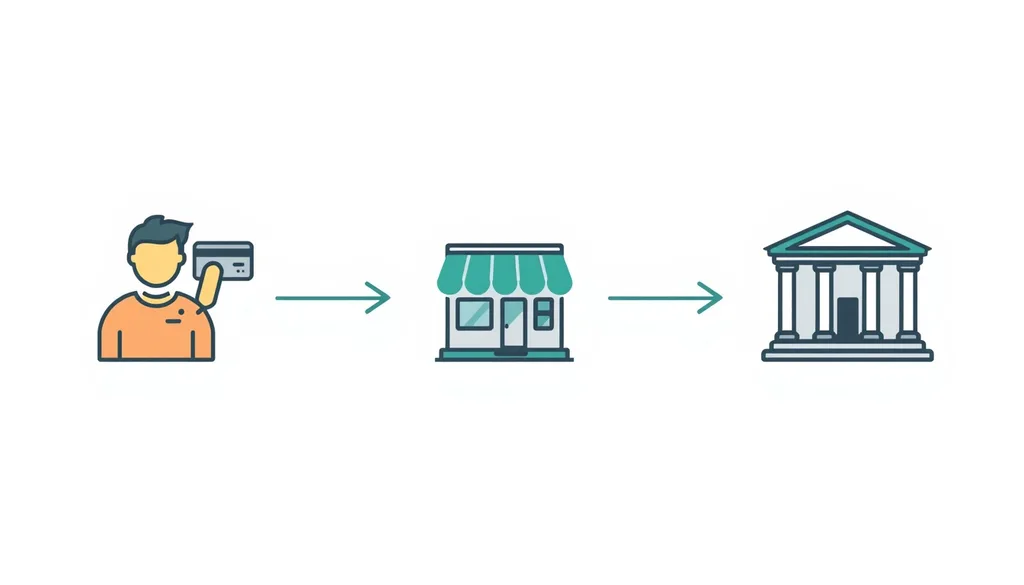
Once you are registered, you add 10% to your taxable sales. When you buy things for your business from other GST-registered suppliers, you can claim back the GST you paid. These refunds are called GST credits, or input tax credits. You report both sides on your Business Activity Statement (BAS).
Here is a hypothetical example. Dan, a plumber, completes a job and invoices $3,000 plus $300 GST, so the customer pays $3,300. During the same quarter, he buys parts and fuel that include $110 of GST. When he lodges his BAS, he reports $300 collected and $110 paid, and sends the ATO the difference of $190. (This is an illustration only, using simple numbers.)
Two quick formulas worth saving:
- To add GST to a price, multiply by 1.1. A $500 price becomes $550.
- To find the GST inside a GST-inclusive price, divide by 11. A $550 price contains $50 of GST.
Many small business owners miscalculate by taking 10% off a GST-inclusive price, which leaves them short. Dividing by 11 is the correct shortcut.
What Includes GST?
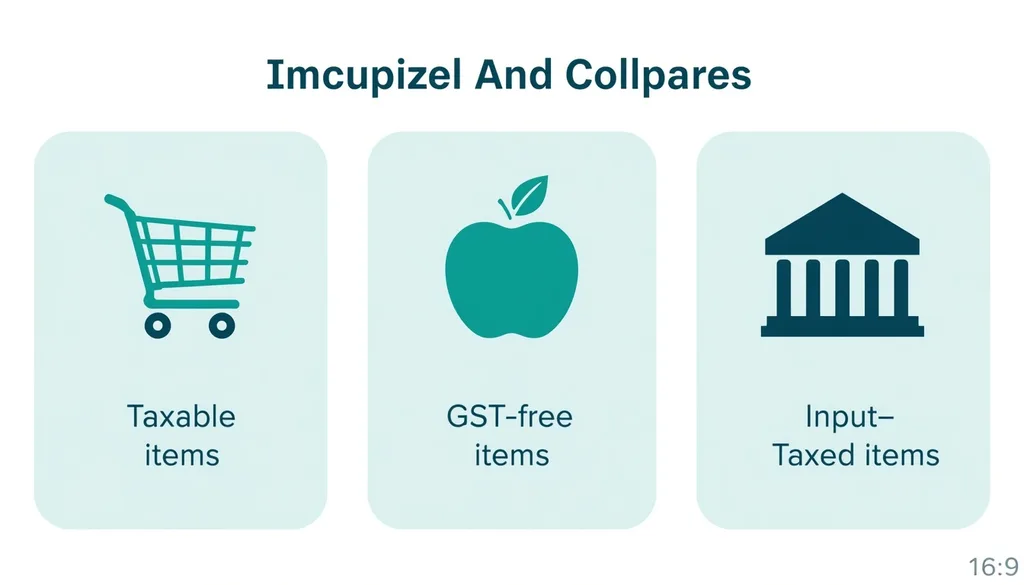
A common question is what includes gst on an everyday invoice or receipt. Most goods and services are taxable, but the law sorts supplies into three groups:
- Taxable supplies: You charge 10% GST and can claim credits on related purchases. Most products and services fall here.
- GST-free supplies: No GST is charged, but you can still claim credits. Examples include basic food, many health and education services and exports.
- Input-taxed supplies: No GST is charged, and you generally cannot claim credits on related purchases. Financial services, residential rent and sales of existing residential property are typical examples.
Food is where people trip up. Fresh vegetables, meat and bread are generally GST-free, while takeaway meals, confectionery and soft drinks are taxable. A café selling both can end up with a mix of both treatments on a single day. The ATO’s guide on when to charge GST has detailed lists, and it is worth checking before you guess.
Who Must Register for GST?
You must register for GST if any of the following apply:
- Your GST turnover is $75,000 or more, or you expect it to be
- You run a non-profit with GST turnover of $150,000 or more
- You provide taxi, limousine or rideshare services, regardless of turnover
- You want to claim fuel tax credits
GST turnover is your gross business income excluding GST, not your profit. A business earning $90,000 and spending $70,000 still has to register, because the test looks at income, not what is left over.
Anyone researching gst australia rules should also remember the timing. Once you know, or should reasonably expect, that you will reach the threshold, you have 21 days to register. Checking your turnover monthly helps you avoid being caught out.
Should You Register Voluntarily?
Below the threshold, registration is optional. The upside is claiming GST credits on equipment and supplies, plus a sense of credibility with larger clients. The downside is that you must charge GST, which makes your prices 10% higher unless you absorb it, and you take on BAS paperwork. Businesses that sell mostly to other registered businesses often find it worthwhile, because their customers can claim the GST back.
How to Register for GST
Before you register, you need an ABN. If you do not have one yet, you can check your details through ABN Lookup once it is issued. Registration itself is free and usually quick. You can register:
- Online through the ATO’s business services
- By phone with the ATO
- Through a registered tax or BAS agent
The business.gov.au guide to registering for GST outlines the steps. You only register once, even if you run several activities through the same entity.
Tax Invoices and Record Keeping
When you make a taxable sale of $82.50 or more (including GST), you must be able to provide a tax invoice. It needs to show your ABN, the words “tax invoice”, the date, a description of what was sold and the GST amount. Your customers need it to claim their own credits.
The same rule applies in reverse. You can only claim GST credits on purchases of $82.50 or more if you hold a valid tax invoice from the supplier. You generally have four years to claim a GST credit. Keep your GST records for at least five years, and store them in a way that is easy to retrieve, whether that is accounting software or a tidy digital folder.
How Do You Report and Pay GST?
You report GST on your Business Activity Statement. Most small businesses lodge quarterly, while monthly reporting is compulsory for very large businesses and optional for others who prefer tighter control of cash flow.
If you collected more GST than you paid, you pay the difference. If you paid more than you collected, you receive a refund. Even if you had no sales in a period, you still need to lodge a nil BAS by the due date, because skipping it counts as a late lodgement.
You can also choose how you account for GST. The ATO’s accounting method guide explains the options:
- Cash accounting: You report GST when money actually changes hands. This suits smaller businesses because you never pay GST on an invoice that has not been paid.
- Accrual accounting: You report GST when invoices are issued or received, regardless of payment. It gives a clearer picture of trading performance but can strain cash flow.
GST and Cash Flow: The Hidden Trap
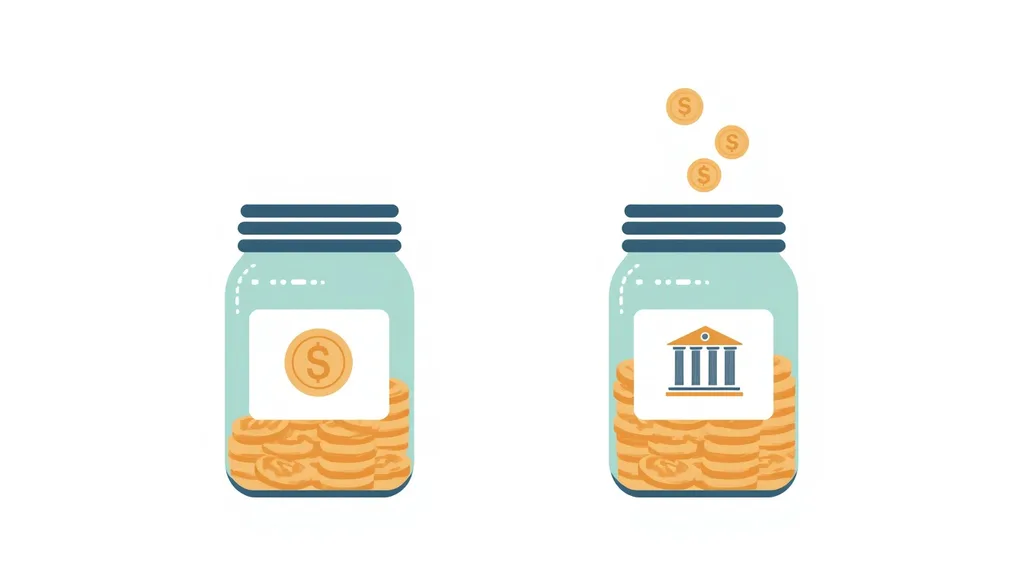
GST is one of the most common reasons otherwise healthy businesses run short of cash. When invoices are paid, the GST portion sits in your bank account and looks like spare money. If you spend it, the BAS bill becomes a nasty surprise.
A few habits make this far easier:
- Set aside GST as you go. Move the GST portion of each payment into a separate savings account.
- Watch your payment terms. On accrual accounting, you can owe GST on invoices your customers have not paid yet.
- Forecast your BAS. Estimate each quarter’s liability a month ahead so there are no surprises.
- Plan for seasonality. A strong quarter means a bigger GST bill, even if cash has already been reinvested.
Common GST Mistakes to Avoid
- Treating GST as income: It belongs to the ATO until you lodge your BAS.
- Missing the registration deadline: You may owe GST on sales made after you should have registered, even if you did not charge it.
- Claiming credits without a tax invoice: The ATO can reverse them.
- Claiming private expenses: Only claim the business portion of mixed-use purchases.
- Mixing up GST-free and input-taxed: Credits are available for one but not the other.
- Forgetting a nil BAS: A late lodgement can attract a penalty even if you owe nothing.
The ATO’s BAS and GST tips page is a useful checklist before each lodgement.
GST and Business Finance
Your GST history says a lot about your business. Lenders often use BAS statements to see how your sales are trending and whether your cash flow can support repayments. That is especially true for low doc applications, where BAS and bank statements replace full financials. A tidy lodgement record can make an application much smoother.

GST payments can also create short-term cash gaps, particularly before a large quarterly bill. If you are weighing up funding options to bridge a gap or grow, White alpaca can help you understand what is available.
Good habits pay off here too. Lodge on time, keep tax invoices organised and separate business and personal spending. These small steps protect you with the ATO and make you easier to lend to.
Final Thoughts
So, what is gst in australia at the end of the day? It is a 10% tax that your customers pay, you collect and the ATO receives, with credits that keep it from costing your business money. Register when you reach the threshold, set the GST aside as you trade, keep proper tax invoices and lodge on time.
If you are planning your next move and want to understand your funding options, you can explore your business finance options today.
This article is general information only and not tax, legal or financial advice. Speak with a registered tax agent, accountant or the ATO about your circumstances.
FAQs (People Also Ask)
1. What does GST stand for in Australia?
GST stands for Goods and Services Tax. It is a 10% tax on most goods and services sold or consumed in Australia. It was introduced on 1 July 2000 and is collected by registered businesses on behalf of the ATO.
2. Do I need to register for GST?
You must register if your GST turnover is $75,000 or more, or $150,000 for non-profits. Taxi and rideshare drivers must register from the first dollar. Below the threshold, registration is optional, but you need an ABN to register.
3. What is GST turnover?
GST turnover is your gross business income excluding GST, not your profit. If you reach or expect to reach the threshold, you generally have 21 days to register, so it is wise to check your turnover regularly.
4. What is GST-free in Australia?
GST-free supplies include basic food, many health and education services and exports. You do not charge GST on them, but you can still claim GST credits on related purchases. Takeaway food, confectionery and soft drinks are generally taxable.
5. What is the difference between GST-free and input-taxed?
With GST-free supplies, you charge no GST but can claim credits on related purchases. With input-taxed supplies, such as financial services and residential rent, you charge no GST and generally cannot claim credits.
6. How often do I lodge a BAS to report GST?
Most small businesses lodge quarterly. Monthly reporting is compulsory for very large businesses and optional for others. If you have nothing to report, you still need to lodge a nil BAS on time.
7. When do I need to issue a tax invoice?
You need to provide a tax invoice for taxable sales of $82.50 or more, including GST. It should show your ABN, the words “tax invoice”, the date, a description of the sale and the GST amount. Customers need it to claim credits.