



GST (goods and services tax) is a 10% tax on most goods and services sold or used in Australia. The customer ultimately pays it, but registered businesses collect it, claim back the GST on their own purchases and send the difference to the ATO on their BAS. Registration is compulsory once your GST turnover reaches $75,000 ($150,000 for non-profits). Basic food, many health and education services and exports are GST-free.
Every Australian has paid GST, but far fewer business owners feel confident about collecting it. Typing what is gst into a search bar usually brings up dense tax language, thresholds and acronyms, when all you want to know is whether you have to charge it and what to do next. This guide skips the jargon. You will follow GST step by step through a real-world example, learn what is taxed and what is not, and pick up habits that stop GST from raiding your cash flow.
Key Takeaways
- GST is a 10% tax on most goods and services sold or consumed in Australia.
- Customers pay it, businesses collect it, and the ATO receives it through the BAS.
- You must register at $75,000 GST turnover, which is your income before GST, not your profit.
- GST credits let you claim back the GST you pay on business purchases, if you hold a valid tax invoice.
- Some supplies are GST-free, and others are input-taxed. The two are treated differently for credits.
- The GST in your bank account is not your money. Set it aside as you trade.
GST in Plain English
GST stands for Goods and Services Tax. Australia introduced it on 1 July 2000, replacing several older taxes with a single, flat 10% rate. You may see it written in full as goods & services tax gst on forms and invoices, but the meaning is the same: a consumption tax added to the price of most things we buy.
The crucial idea is that GST is designed to land on the final buyer, not on your business. You act as a collector. You add GST to your taxable sales, you claim back the GST on your business purchases, and you pay the ATO only the difference. If you ever feel like GST is costing your business money, something in the process has gone wrong, usually missing tax invoices or untracked cash.
Follow the Dollar: How GST Travels Through a Supply Chain
The easiest way to understand how gst in australia works is to follow a product from raw material to checkout. Here is a hypothetical example using round numbers.
A timber merchant sells $1,000 of timber to a furniture maker and adds $100 GST, so the maker pays $1,100. The maker builds a table and sells it to a customer for $3,000 plus $300 GST, so the customer pays $3,300.

Now look at what each business sends to the ATO:
- The timber merchant collected $100 and has no GST credits to claim in this example, so it pays $100.
- The furniture maker collected $300 but paid $100 on the timber, so it claims the $100 as a credit and pays $200.
Add those together and the ATO has received $300, which is exactly 10% of the final $3,000 price. Both businesses were left no worse off, and the customer carried the tax. That is the whole system in a nutshell.
What Is Taxed and What Is Not?
A reasonable question at this point is what includes gst on a typical sale. Most goods and services are taxable, but the law divides supplies into three groups:
- Taxable supplies: You charge 10% GST and can claim credits on related purchases.
- GST-free supplies: You charge no GST, but you can still claim credits. These include basic food, many health and education services and exports.
- Input-taxed supplies: You charge no GST, and you generally cannot claim credits on related purchases. Financial services, residential rent and sales of existing residential property are common examples.
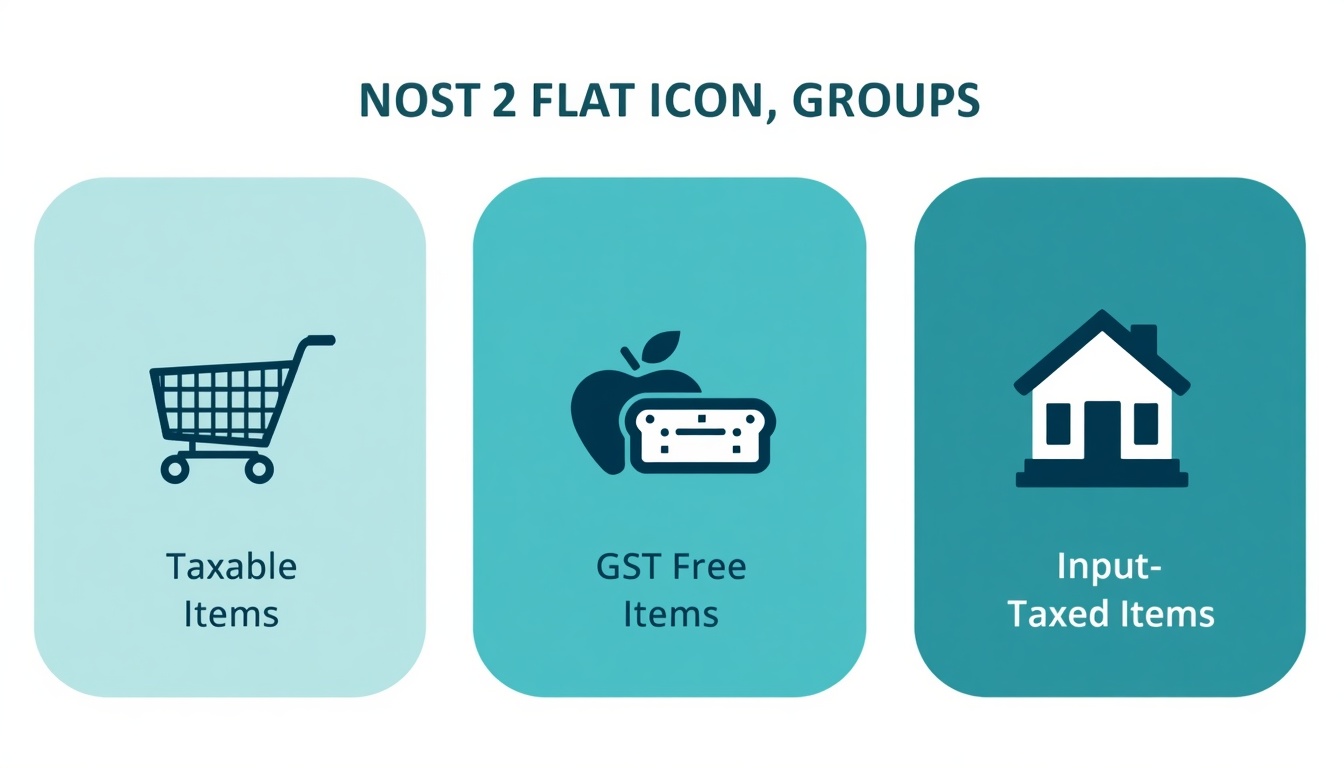
The difference between the last two matters more than it sounds. A GST-free business can recover the GST on its expenses, while an input-taxed business generally cannot, which affects how it prices its services.
Food causes the most confusion. Fresh fruit, vegetables and meat are generally GST-free, while takeaway meals, confectionery and soft drinks are taxable. A bakery or café can sell both kinds in the same transaction. The ATO’s guidance on when to charge GST lists the details, so check it rather than guess.
The $75,000 Question: Do You Have to Register?
Having an ABN does not automatically mean you must register for GST. You must register if:
- Your GST turnover is $75,000 or more, or you expect it to be
- You are a non-profit with GST turnover of $150,000 or more
- You provide taxi, limousine or rideshare services, whatever your turnover
- You want to claim fuel tax credits
GST turnover means your gross business income excluding GST. It is not profit. A business earning $90,000 and spending $70,000 on costs still has to register, because the test looks at income.
Anyone searching gst australia rules should note the deadline: once you know, or should reasonably expect, that you will hit the threshold, you have 21 days to register. A quick monthly check of your turnover keeps you on the right side of the ATO. Miss the deadline and you may owe GST on sales made after you should have registered, even if you never charged it to your customers.
Should You Register Early?
Below the threshold, registration is optional. Registering lets you claim GST credits on equipment and supplies, and it can make you look established to larger clients. The trade-off is that you must charge GST, which makes your prices 10% higher unless you absorb the tax, and you take on BAS reporting. If your customers are mostly GST-registered businesses, they can claim your GST back, so early registration is often painless. If you sell mainly to the public, it deserves more thought.
How to Register
You need an ABN first. Once you have one, registering for GST is free and usually quick. You can register through the ATO’s online business services, by phone or through a registered tax or BAS agent. The business.gov.au GST registration guide walks you through each step, and the ATO’s registration page covers the finer points. You can also check any supplier’s ABN and GST status on ABN Lookup.
Your First Week After Registering
Registration is only the starting line. In your first week, it helps to:
- Update your invoices so they show your ABN, the words “tax invoice” and the GST amount.
- Check your prices. If you price GST-inclusive, remember the shortcut: divide by 11 to find the GST inside the price. A $1,100 price contains $100 of GST.
- Open a separate savings account for GST so it does not blend into daily spending.
- Choose your tools. Accounting software that tracks GST automatically saves hours at BAS time.
- Ask your accountant which accounting method suits you.
Tax Invoices Made Easy
For a taxable sale of $82.50 or more (including GST), you must be able to give your customer a tax invoice. It should show your ABN, the date, a description of what was sold and the GST amount. Your customers need it to claim their own credits.
The rule works both ways. You can only claim a GST credit on a purchase of $82.50 or more if you hold a valid tax invoice from the supplier. Generally, you have four years to claim a credit, and you should keep your GST records for at least five years. A tidy digital folder is enough, as long as you can find the document when the ATO asks.
Lodging and Paying: Your BAS
You report GST on your Business Activity Statement. Most small businesses lodge quarterly, while monthly reporting is optional for smaller operators and compulsory for the very largest. If you collected more GST than you paid, you pay the difference. If you paid more, you receive a refund. If you had no activity at all, you still lodge a nil BAS on time, because skipping it counts as a late lodgement.
Your accounting method also matters:
- Cash accounting reports GST when money moves, so you never pay GST on an invoice your customer has not yet paid.
- Accrual accounting reports GST when invoices are issued or received, which can mean paying the ATO before you are paid.
The ATO explains the options in its BAS and GST tips, which is also a handy pre-lodgement checklist.
Protecting Your Cash Flow
GST is a classic cash flow trap. When a customer pays $3,300 for a $3,000 job, the extra $300 sits in your account and looks like profit. Spend it, and your next BAS can feel like a surprise tax bill. A few habits help:
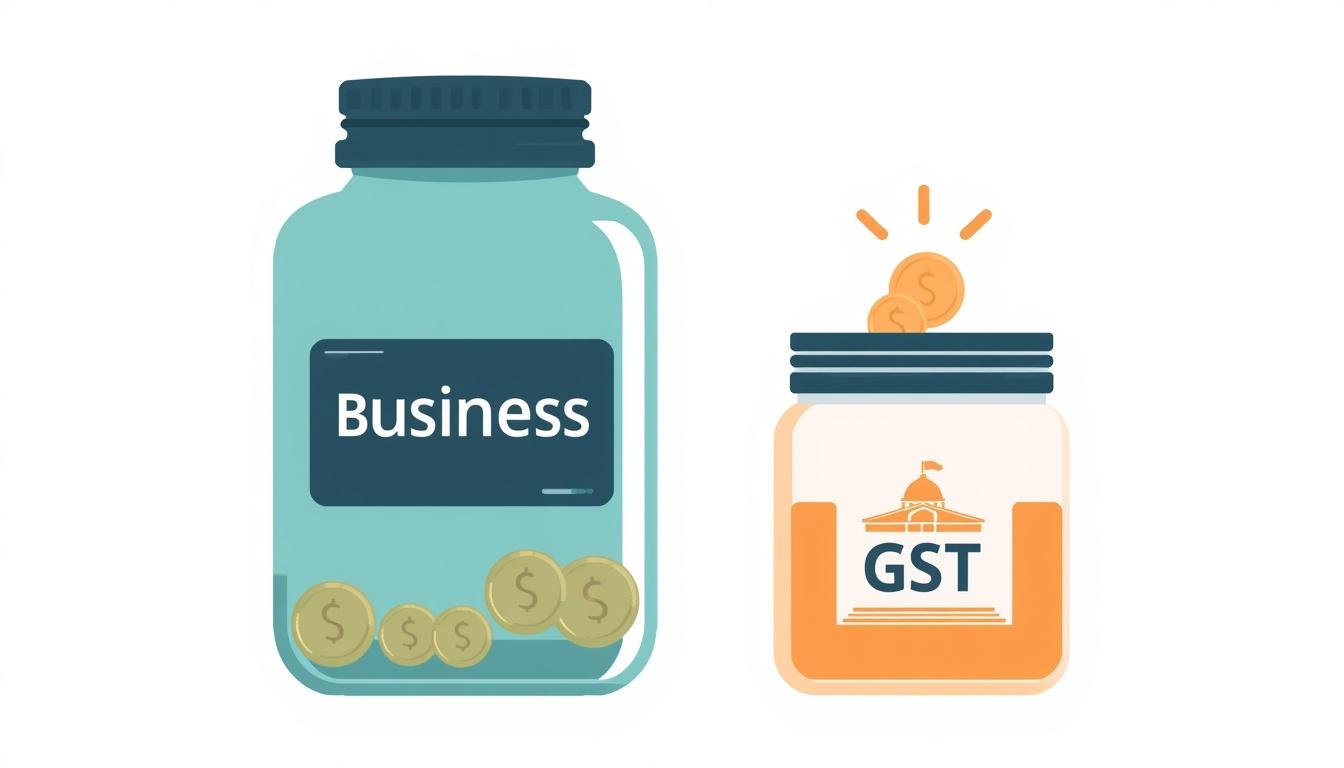
- Move the GST portion aside whenever a payment arrives.
- Estimate your BAS a month before it is due.
- Watch your payment terms, especially on accrual accounting.
- Expect busy quarters to bring bigger bills, even if your cash is already reinvested.
Common Mistakes to Avoid
- Treating GST as income. It belongs to the ATO until you lodge.
- Claiming credits without a tax invoice. The ATO can reverse them.
- Claiming private spending. Only the business portion of mixed-use purchases is claimable.
- Confusing GST-free with input-taxed. One allows credits, the other generally does not.
- Registering late. The 21-day window is short.
- Forgetting a nil BAS. A late lodgement can attract a penalty even when you owe nothing.
When GST Meets Business Finance
Your lodgement history tells lenders a lot about your business. Many use BAS statements to see how your sales are trending and whether your cash flow can handle repayments, especially for low doc loans where BAS and bank statements replace full financials. Consistent, on-time lodgements make that picture much clearer.

A large quarterly GST bill can also open a short-term cash gap, even in a healthy business. If you are weighing up funding to cover a gap or fuel growth, White alpaca can explain the options that may suit you.
Final Thoughts
So, what is gst in australia once the jargon is stripped away? It is a 10% tax that your customers pay, you collect and the ATO receives, with credits that stop it from eating into your margins. Register when you reach the threshold, issue proper tax invoices, set the GST aside as you trade and lodge your BAS on time.
If you are planning your next move and want to understand your funding options, you can explore your business finance options today.
This article is general information only and not tax, legal or financial advice. Speak with a registered tax agent, accountant or the ATO about your circumstances.
FAQs (People Also Ask)
1. What is the difference between GST and VAT?
Both are consumption taxes charged on goods and services, and GST works in a similar way to VAT in other countries. Australia’s GST is a flat 10% on most supplies, with exemptions for items such as basic food, many health services, education and exports.
2. Do I charge GST if I am not registered?
No. If you are not registered for GST, you do not add it to your prices and you cannot claim GST credits on your purchases. If your turnover reaches the threshold, you must register within 21 days and start charging GST from that point.
3. Can I claim GST on everything I buy for my business?
No. You can only claim GST credits on purchases used in your business, and you need a valid tax invoice for purchases of $82.50 or more. Private expenses and purchases related to input-taxed supplies are generally not claimable.
4. How long should I keep GST records?
Keep your GST records, including tax invoices, for at least five years. You generally have four years to claim a GST credit, so organised records make it easier to claim correctly and answer any ATO questions.
5. Is GST charged on exports?
Exports are generally GST-free, which means you charge no GST but can still claim credits on related purchases. Specific conditions apply, so check the ATO’s guidance or speak to your accountant before treating a sale as an export.
6. Can I cancel my GST registration?
You may be able to cancel if your turnover drops below the threshold and you expect it to stay there. You will still need to meet any final reporting and payment obligations, so talk to your tax agent before you cancel.
7. What is the difference between GST and BAS?
GST is the tax itself. A BAS (Business Activity Statement) is the form you use to report and pay GST, along with other tax obligations such as PAYG withholding. Most small businesses lodge a BAS each quarter.